
 Submit Manuscript
Review Article | Open Access
A Better Multidisciplinary Approach in Treatment and Prognosis for Stage IV Renal Cell Carcinoma
Sunil Vitthalrao Jagtap1, Shubham S Jagtap2, Drashti Maradiya1, Anshuli Vispute1, Sai Kaushal Manchikalapudi1
1Department of Pathology, Krishna Vishwa Vidyapeeth (KVV), Krishna Institute of Medical Sciences, Karad, India.
2Department of Medicine, Krishna Vishwa Vidyapeeth (KVV), Krishna Institute of Medical Sciences, Karad, India.
Correspondence: Sunil Vitthalrao Jagtap (Department of Pathology, Krishna Vishwa Vidyapeeth, Krishna Institute of Medical Sciences, Deemed University, Karad-415110, Maharashtra, India; Email: drsvjagtap@gmail.com).
Annals of Urologic Oncology 2026, 9: 6. https://doi.org/10.32948/auo.2026.09.20
Received: 14 Feb 2026 | Accepted: 14 Sep 2026 | Published online: 13 Oct 2026
Key words renal cell carcinoma, metastatic RCC, systemic treatment, immunotherapy, healthcare facility
Gross pathological features, Staging and Surgical Management of RCC. The treatment guidelines for RCC depend on its stage. Various national and international urological and medical oncology societies and associations have published guidelines on RCC [5]. The 2022 RCC guidelines have been updated by a multidisciplinary panel of experts using the highest methodological standards. The eighth edition of the Union for International Cancer Control (UICC) TNM(tumour–node–metastasis) system is used for staging for urologic cancers [6].
T4 N1 M0 disease is locally advanced but not metastatic. The stage IV kidney cancer with the T4, N1, M0 staging, meaning the tumor has grown beyond Gerot’s fascia (possibly into the adrenal gland), has spread to nearby lymph nodes, but has not spread to distant parts of the body. This is a locally advanced cancer because it has grown into nearby tissues and lymph nodes, but it is not yet metastatic. Stage IV kidney cancer typically involves any tumor with distant metastasis (M1), regardless of the T or N status. The choice of treatment for RCC depends on the histopathological type, grades of tumor, tumor stagings, capsular / renal sinus / vascular invasion, invasion,molecular / cytogenetics alteration, overall patient health and other individualized factors.
For patients with stage IV disease, surgery can sometimes be beneficial as part of a comprehensive treatment plan. Cytoreductive nephrectomy before systemic therapy is recommended in select patients with a potentially surgically resectable primary tumor mass [7]. On gross examination the classic RCC are usually well circumscribed, centred in cortex. Herewith showing the resected specimen of radical nephrectomy, consists of a kidney, perirenal fat with an attached segment of ureter, renal vein and artery. Kidney in enlarged and weighs 385 grams and measures 11.5 x 7.5 x 5.2 cm. External surface was irregular with tumor invasion to surrounding perinephric fat and nodes (Figure 1), cut surface on gross showing large solid yellow-grey tumor mass areas with variable amounts of cystic change, extensive haemorrhage and necrosis (Figure 2), and renal tumor with capsular invasion (Figure 3).
For the potentially surgically resectable primary RCC and oligometastatic sites are candidates for nephrectomy and management of metastases by surgical metastasectomy or with ablative techniques for selected patients who are not candidates for metastasectomy. In patients whose tumors are surgically unresectable, the NCCN Panel recommends performing tissue sampling to confirm diagnosis of RCC to determine histology and guide subsequent management [8]. The European Association of Urology (EAU) RCC guidelines panel has compiled clinical guidelines for the management of RCC [9].
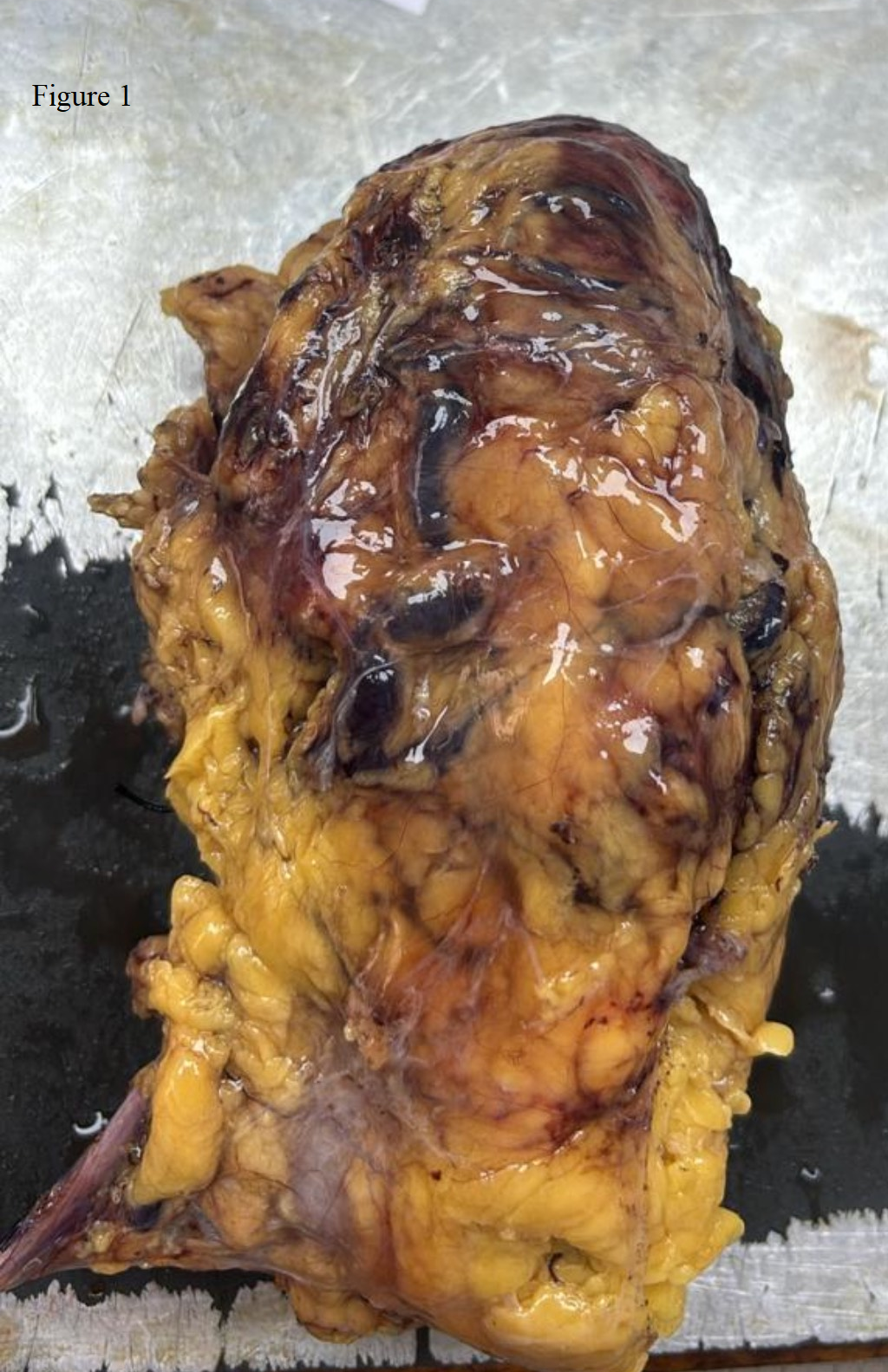 Figure 1. Radical nephrectomy specimen consists of a enlarged kidney, perirenal fat with an attached segment of ureter, renal vein and artery. External surface is irregular with tumor invasion to surrounding perinephric fat, nodes and hilar region.
 Figure 2. Cut surface showing large renal tumor mass with extensive tumor necrosis and hemorrhages.
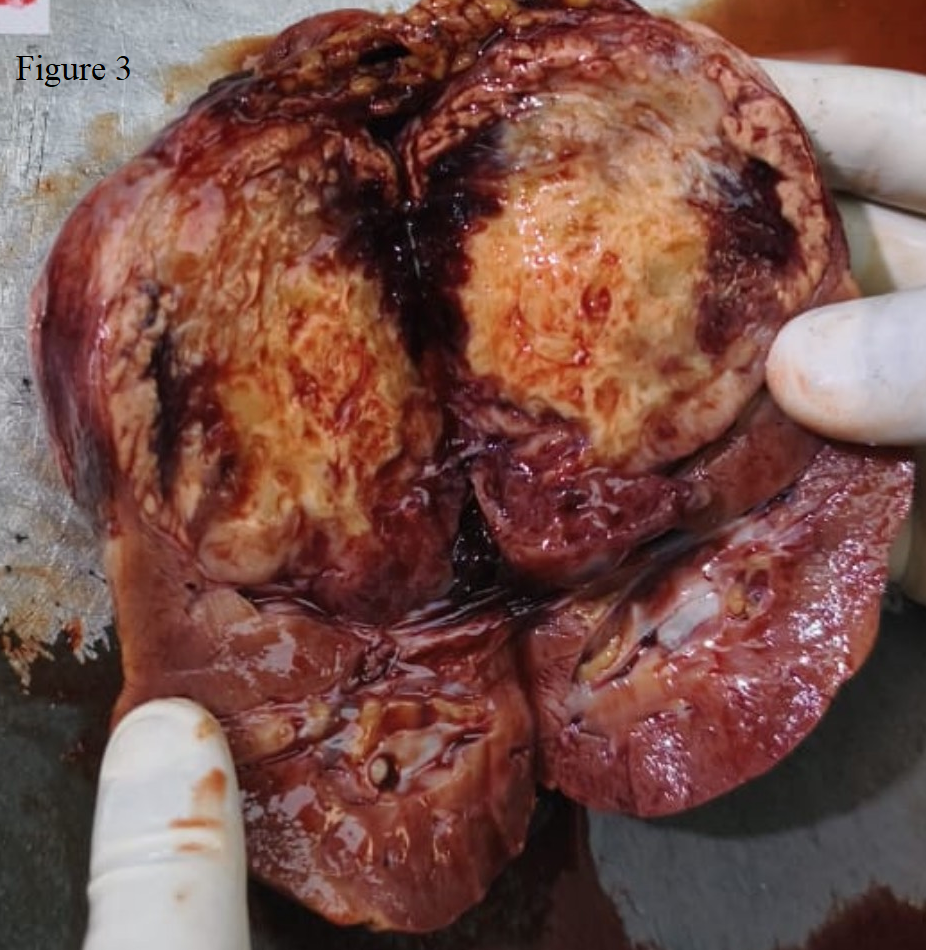 Figure 3. Radical nephrectomy specimen showing large renal tumor with necrosis, capsular and fascia invasion.
It is crucial for medical oncologists in academic settings to collaborate with community practitioners, especially urologists and oncologists, in a multidisciplinary model that fosters exceptional patient care and supports innovative clinical and translational research. In such situations academic medical centres have to play important roles. The clinicians should be aware of new entities of subtypes of RCC like PRCC Type-II. As the prognosis of PRCC Type-II is poorer than Type-I, these tumors should be properly evaluated [12].
First-line treatments for early-stage RCC are partial or radical nephrectomy, ablative techniques like cryoablation, radiofrequency ablation, radiation. More than 50% of patients with early-stage RCC are cured, but the outcome for stage IV disease is poor. A systematic review of 49 studies conducted in 2015 indicated that systemic therapies for primarily metastatic RCC are linked to poorer progression-free survival and overall survival in patients with non-clear cell RCC compared to those with clear cell RCC [13]. Furthermore, patients with localized disease have survival rates exceeding 90%. The presence of regional and distant metastasis has been associated with a significantly poorer prognosis, with 5-year survival rates between 5 and 20% [14].
The occurrence of regional and distal metastasis is linked to a significantly poorer prognosis, with 5-year survival rates ranging from 5% to 20% [15]. Many elderly patients with metastatic stage IV RCC often do not receive surgery or systemic therapy for up to 6 months following diagnosis due to competing mortality factors. In patients with locoregional clear-cell RCC, neoadjuvant targeted systemic therapy has consistently resulted in a reduction in primary tumor size, benefiting those with tumors that are not initially resectable. Additionally, the underreporting of metastatic stage IV RCC may stem from the limitations of cross-sectional imaging techniques. It has been noted that patients with pT4 RCC post-radical nephrectomy demonstrate poor survival rates. However, the advent of new treatment modalities has positioned immunotherapy as the first-line option for managing metastatic renal cell carcinoma. In with the introduction of targeted therapies and immune checkpoint inhibitors the introduction of VEGF inhibitors, mTOR inhibitors, and immunotherapy in the management of stage IV RCC, the therapeutic landscape has evolved significantly [16]. An immune checkpoint inhibitor–based combination therapy is currently considered the frontline standard of care.
Multi-institutional approaches are critical in the context of stage IV RCC because they encourage standardization, coherence, and accelerate updates in a field of rapidly evolving treatment options.
The academic centres have technological, translational, and clinical investigation through offering participation in clinical research than non-academic centre. The academic centres can communicate the expertise, prominence, and guideline committee membership of its clinicians. The role of the community oncologist has grown increasingly important in the network of care for RCC patients.
Patients suffering from brain metastases due to metastatic renal RCC experienced extended overall survival by incorporating stereotactic radiation therapy alongside immunotherapy. Future research should take into account variables such as risk stratification according to the International mRCC Database Consortium, oligometastatic tumor load, stereotactic radiation therapy dose and fractionation, as well as the application of combination therapies to more effectively pinpoint patients who could benefit from the dual approach of stereotactic radiation therapy and immunotherapy. The stereotactic ablative radiotherapy can delay systemic therapy, which may improve quality of life [20].
Targeted anti-angiogenic therapies and immunotherapy via PD-L1 inhibition have emerged as the cornerstone of treatment for metastatic RCC, resulting in advancements in not only progression-free survival but also overall survival in comparison to older treatments like IL-2 and interferon [21].
The emergence of effective targeted therapies for metastatic RCC significantly improved patients’ prognosis than conventional cytotoxic chemotherapy. The agents such as sunitinib, pazopanib, axitinib (VEGF receptor tyrosine kinase inhibitors), and everolimus (mTOR inhibitor) have been standard treatments. Renal toxicities of targeted therapies are generally mild to moderate in severity and can be managed effectively [22].
The treatment at academic centres, which employ advanced providers and novel therapies. Bob Weng, et al, observed that patients with metastatic RCC treated at academic/research facilities experienced increased survival compared to patients treated at non-academic facilities [23]. A study from Dursun F et al, observed that the treatment at academic centres and high-volume hospitals was associated with a survival benefit in patients with metastatic RCC. As it is related to, more likely receiving immunotherapy and prior cytoreductive nephrectomy [24].
An immunotherapy plays an important role. Currently, the use of immuno-oncology (IO) drugs has substantially changed the strategy of systemic therapy for advanced RCC. IO-IO combination therapy includes a single regimen, namely nivolumab plus ipilimumab, and it has been recommended as the standard systemic therapy for previously untreated advanced RCC in patients classified into the International MetastaticRCC Database Consortium (IMDC) score into three as: favorable risk, intermediate and poor-risk group [25]. Immune-checkpoint inhibitors (ICIs) emerged in 2015, The United States Food and Drug Administration approved Nivolumab to treat metastatic RCC, with Nivolumab it was found to improve overall survival [26]. Rini B.I et al, study noted that in the first interim analysis of the randomized, multicentre, open-label, phase 3 KEYNOTE-426 study (NCT02853331), treatment with Pembrolizumab plus axitinib significantly improved overall survival vs sunitinib monotherapy in treatment-naive advanced RCC [27]. It is observed that the ICIs tend to produce more durable responses, potentially leading to long-term remission in a subset of patients, whereas targeted therapy responses are often limited by acquired resistance.
Recent advances in molecular profiling have led to the discovery of novel prognostic biomarkers for RCC, along with new imaging technologies. Additionally, academic centres have more qualified surgeons, adequate diagnostic facilities and infrastructure, including intensive care units. They often enjoy high stature in their communities, due to a perception that they deliver high-quality, advanced care, access to new drugs and technologies. The role of the community oncologist has grown increasingly important in the network of care for RCC patients to improve community cancer care [28].
Martinez LS et al, noted that clinical and translational research has traditionally been conducted by academic institutions [29]. However, there is now a promising opportunity to integrate community practitioners into the research framework. Academic centres and comparable organizations should work together to enhance their academic goals by securing funding to support research and training initiatives aimed at improving treatment and decreasing mortality rates among patients with RCC. Better renal cancer-awareness programs, specific effective cancer-treatment guideline, and establishing a cancer registry are required for better outcome. The survival benefit is certainly due to the complex and multidisciplinary management of the patient and the sequence of treatments. ASCO believes that cancer clinical trials are vital to inform medical decisions and improve cancer care, and that all patients should have the opportunity to participate [30].
The prospective study from Procopio G et al, showed that systemic treatment with sorafenib did not increase RFS as compared with observation in metastatic renal cell carcinoma (mRCC) patients following radical metastasectomy [31]. Treatment advances in kidney cancer continually evolve. The focus of treatment options continues with oral vascular endothelial growth factor receptor (VEGFR) tyrosine kinase\ inhibitors (TKIs) or intravenous immune checkpoint inhibitors [32].
Recently, the results of a phase II randomized trial (CABOSUN) were reported: cabozantinib, a tyrosine kinase inhibitor of VEGFR2, mesenchymal‐epithelial transition factor, and apoptotic cell recognition receptor, demonstrated a significant benefit in overall response rate and progression free survival over sunitinib in untreated intermediate and poor risk patients with mRCC [33].
A prognostic model developed and is known as the IMDC (International Metastatic RCC Database Consortium) or Heng’s model which was derived from a population of patients with metastatic RCC treated with vascular endothelial growth factor (VEGF)-targeted therapy [34].
The role of adjuvant treatment after cytoreductive nephrectomy in high-risk clear cell RCC are currently ongoing by multiple trials. This will hopefully provide more clue on proper patient and therapy selection in the adjuvant setting [35].
De Raffele E, et al, noted the multiple systemic treatments and repeated series of surgical operations in aggressive surgical resection, can be safely performed with long-term survival in selected patients [36]. At present, it has not been possible to achieve magnificent success in adjuvant therapy of RCC in patients at high risk of relapse after surgical treatment. There remains hope for adjuvant pembrolizumab, which has been used for high-risk population including patients [37].
Overall patients with stage IV RCC, medicines such as immunotherapy and targeted drugs are the main treatments, still in some cases surgery may still be a part of treatment. In most patients with advanced or metastatic RCC who require systemic therapy, immune checkpoint inhibitor–based combination therapy is currently considered. In Table 1 shows management for advanced RCC are of various guidelines, trends, organizations, database, associations/societies are given [7, 20, 21, 25-27, 31-34, 38-48].
In many patients with stage IV RCC, ICIs have transformed the treatment paradigm by offering durable clinical benefits and improved survival. Optimal management increasingly involves personalized strategies, balancing efficacy and toxicity, with a trend toward combination regimens to maximize therapeutic benefit.
The large Phase III randomized clinical trials that have been performed to assess the safety and efficacy of these systemic therapies in the adjuvant setting [48, 49]. However, it has not been possible to achieve magnificent success in adjuvan therapy of RCC in patients at high risk of relapse after surgical treatment [50]. Adjuvant therapy in RCC has been studied for over twenty years, starting with vaccines, cytokines, TKIs and more recently with immunotherapy. The Tuscan Interdisciplinary Uro-Oncological Group (GIOTTO) gives practical, shared recommendations for the use of adjuvant therapy in surgically treated RCC patients [51]. Aldin A et al, study on first-line therapy for adults with advanced RCC observed that, since the combination of ipilimumab plus nivolumab and combination axitinib plus pembrolizumab shown better results and replacing older drugs like pazopanib and sunitinib [52]. Haas NB et al study shows use of adjuvant sunitinib or sorafenib for high-risk, non-metastatic renal-cell carcinoma (ECOG-ACRIN E2805) [53]. The recent clinical trials have been conducted to assess the efficacy and safety of new drugs in adjuvant therapy for advance RCCs and multidisciplinary managements approaches [54]. Nevertheless, despite many recent drug approvals for RCC, there remains need to identify new therapeutic targets for better results. Further independent validation studies are necessary to confirm the potential predictive and specific treatment for advanced RCC.
|
Table 1. Treatment modalities for advanced renal cell carcinoma. |
||
|
Mode of treatment |
Specific therapy |
Therapy categories / details |
|
Localized Treatment |
Surgery |
A) may include radical nephrectomy [41] B) cytoreductive nephrectomy [7] C) depending on resectability and the extent of metastasis [45] |
|
Radiotherapy [39] |
Stereotactic body radiotherapy [20] — an option for patients not eligible for surgery. |
|
|
Thermal Ablation |
A) radiofrequency [20] B) cryoablation; considered for small lesions in select patients C) who are not candidates for surgery |
|
|
Systemic Therapy [16] (First-line) |
Targeted Therapy [38, 52] |
Cabozantinib — Tyrosine Kinase Inhibitor (TKI): a multireceptor TKI often used as a single agent, including for non–clear cell RCC, and can be used after previous therapy. Lenvatinib + Everolimus — Targeted Therapy (TKI + mTOR inhibitor): an option for patients who have already been treated with certain TKIs [46]. Tivozanib (VEGFr) — Tyrosine Kinase Inhibitor (TKI): an option for patients who have had multiple prior systemic therapies [44, 46]. Everolimus / Temsirolimus — mTOR Inhibitors: used for patients who have been previously treated with other targeted therapies [47]. |
|
Combination Immunotherapy (IO drugs) + Targeted Therapy [48, 50, 51, 52] |
Bevacizumab + IFN-α Ipilimumab + Nivolumab Pembrolizumab + Axitinib Pembrolizumab + Lenvatinib Nivolumab + Cabozantinib |
|
|
Systemic Therapy (Other options) [16, 20, 21, 24, 43, 56] |
Multidisciplinary |
Cytoreductive nephrectomy, targeted agents, systemic therapy, cytokine therapy. Dual immune checkpoint inhibitor combinations (anti-CTLA4 and anti-PDL1). Metastasectomy can be achieved either with surgery or radiation. Second-line systemic therapy after failure of first-line therapy. |
|
Single-Agent Targeted Therapy [52] |
Pazopanib Cabozantinib Sunitinib [47] Temsirolimus |
|
|
Clinical Trials |
S-TRAC Phase III Trial [54] |
Sunitinib |
|
RAMPART trial (valid option for most patients with stage IV RCC [49] |
After radical surgery, using durvalumab (anti–PD-L1 antibody) and tremelimumab (anti–CTLA-4 antibody). |
|
|
ASSURE [53] Double-blind, placebo-controlled, randomised, phase III trial |
Sunitinib + Sorafenib — adjuvant sunitinib or sorafenib for high-risk, non-metastatic renal-cell carcinoma: ECOG-ACRIN E2805 [53]. Bevacizumab plus interferon alfa-2a for treatment of metastatic renal cell carcinoma [40]. |
|
- Hollingsworth JM, Miller DC, Daignault S, Hollenbeck BK: Rising incidence of small renal masses: a need to reassess treatment effect. J Natl Cancer Inst 2006, 98(18):1331-1334.
- Siegel RL, Miller K, Jemal A: Cancer statistics-2020. CA Cancer J. Clin. 2020, 70(1): 7-30.
- Jagtap SV, Jagtap SS, Macchi H, Shah P, Borade D: Renal cell carcinoma with sarcomatoid and rhabdoid dedifferentiation: Clinico pathological significance- Review. Ann Urol Oncol 2024, 7(3): 90-90.
- Heng DY, Xie W, Regan MM, Harshman LC, Bjarnason GA, Vaishampayan UN, Mackenzie M, Wood L, Donskov F, Tan MH, et al: External validation and comparison with other models of the International Metastatic Renal-Cell Carcinoma Database Consortium prognostic model: a population-based study. Lancet Oncol 2013, 14(2): 141- 48.
- Bosserman LD, Cianfrocca M, Yuh B, Yeon C, Chen H, Sentovich S,et al. Integrating academic and community cancer care and research through multidisciplinary oncology pathways for value-based care: A review and the city of hope experience. J Clin Med. 2021, 10(2): 188.
- Paner GP, Stadler WM, Hansel DE, Montironi R, Lin DW, Amin MB, et al: Updates in the eighth edition of the Tumor-Node-Metastasis staging classification for urologic cancers,European Urology 2018, 73(4): 560-569.
- Culp SH, Tannir NM, Abel EJ, Margulis V, Tamboli P, Matin SF, Wood CG: Can we better select patients with metastatic renal cell carcinoma for cytoreductive nephrectomy? Cancer 2010, 116(14): 3378-3388.
- Motzer RJ, Jonasch E, Agarwal N, Alva A, Baine M, Beckermann K, Carlo MI, Choueiri TK, Costello BA, Derweesh IH: Kidney Cancer, Version 3.2022, NCCN clinical practice guidelines in oncology. J Natl Compr Canc Netw 2022, 20(1): 71-90.
- Ljungberg B, Albiges L, Abu-Ghanem Y, Bedke J, Capitanio U, Dabestani S, Fernández-Pello S, Giles RH, Hofmann F, Hora M et al: European Association of Urology Guidelines on renal cell carcinoma: The 2022 Update. Eur Urol 2022, 82(4): 399-410.
- Salgia NJ, Philip EJ, Ziari M, Yap K, Pal SK: Advancing the science and management of renal cell carcinoma: bridging the divide between academic and community practices. J Clin Med 2020, 9(5): 1508.
- Batai K, Harb-De la Rosa A, Lwin A, Chaus F, Gachupin FC, Price E, Lee BR: Racial and ethnic disparities in renal cell carcinoma: an analysis of clinical characteristics. Clin Genitourin Cancer 2019, 17(1): e195-e202.
- Jagtap SV, Beniwal A, Jagtap SS, Huddedar A: Papillary renal cell carcinoma type-II: a distinct clinicopathological subtype of renal epithelial neoplasm. Ann Pathol Lab Med 2016, 3(6): 280-282.
- Vera-Badillo FE, Templeton AJ, Duran I, Ocana A, de Gouveia P, Aneja P, Knox JJ, Tannocka IF, Escudier B, Amir E: Systemic therapy for non–clear cell renal cell carcinomas: A systematic review and meta-analysis. Eur Urol 2015, 67(4): 740-749.
- Calvo E, Schmidinger M, Heng DY, Grunwald V, Escudier B: Improvement in survival end points of patients with metastatic renal cell carcinoma through sequential targeted therapy. Cancer Treat Rev 2016, 50: 109-117.
- Sheth Bhutada J, Hwang A, Liu L, Deapen D, Freyer DR: Poor-prognosis metastatic cancers in adolescents and young adults: incidence patterns, trends, and disparities. JNCI Cancer Spectr 2021, 5(3): pkab039.
- Bedke J, Gauler T, Grunwald V, Hegele A, Herrmann E, Hinz S, Janssen J, Schmitz S, Schostak M, Tesch H, et al: Systemic therapy in metastatic renal cell carcinoma. World J Urol 2017, 35(2): 179-188.
- Lane BR, Derweesh IH, Kim HL, O'Malley R, Klink J, Ercole CE, Palazzi KL, Thomas AA, Rini BI, Campbell SC: Presurgical sunitinib reduces tumor size and may facilitate partial nephrectomy in patients with renal cell carcinoma. Urol Oncol 2015, 33(3): 112.e15-112.e21.
- Nazim SM, Ather MH, Hafeez K, Salam B: Accuracy of multidetector CT scans in staging of renal carcinoma. Int J Surg 2011, 9(1): 86-90.
- McDermott DF, Lee JL, Bjarnason GA, Larkin JMG, Gafanov RA, Kochenderfer MD, Jensen NV, Donskov F, Malik J, Poprach A et al: Open-label, single-arm phase II study of pembrolizumab monotherapy as first-line therapy in patients with advanced clear cell renal cell carcinoma. J Clin Oncol 2021, 39(9): 1020-1028.
- Piening A, Al-Hammadi N, Dombrowski J, Hamilton Z, Teague RM, Swaminath A, Shahi J: Survival in metastatic renal cell carcinoma treated with immunotherapy and stereotactic radiation therapy or immunotherapy alone: A National Cancer Database Analysis. Adv Radiat Oncol 2023, 8(5): 101238.
- Shawn D, Kristine L, Raquibul H, Eris S, and Karie R: State of the Art: multidisciplinary management of oligometastatic renal cell carcinoma. Am Soc Clin Oncol Educ Book 2023, 43: e390038.
- Weinstock M, McDermott D: Targeting PD-1/PD-L1 in the treatment of metastatic renal cell carcinoma. Ther Adv Urol 2015, 7(6): 365-377.
- Weng B, Braaten M, Lehn J, Morrissey R, Asghar MS, Silberstein P, Abdul Jabbar AB, Mathews A, Tauseef A, Mirza M: Survival and treatment of stage IV renal cell carcinoma in academic vs non-academic medical centers. World J Nephrol 2025, 14(2): 103923.
- Dursun F, Elshabrawy A, Wang H, Oelsen J, Liss M, Kaushik D, Ramamurthy C, Rodriguez R, Mansour AM: Impact of facility type and volume on survival in patients with metastatic renal cell carcinoma. Can J Urol 2021, 28(5): 10806-10816.
- Santoni M, Buti S, Myint ZW, Maruzzo M, Iacovelli R, Pichler M, Kopecky K, Kucharz J, Rizzo M, Galliet L et al: Real-world outcome of patients with advanced renal cell carcinoma and intermediate- or poor-risk international metastatic renal cell carcinoma database consortium criteria treated by immune-oncology combinations: differential effectiveness by risk group? Eur Urol Oncol 2024, 7(1): 102-111.
- Arjab Adhikari, Supriya Sapkota, Sopiko Gogia, Ojbindra KC: Changes in the overall survival of patients with metastatic renal cell carcinoma in the era of immune-checkpoint inhibitors. Cancer Epidemiol 2024, 92: 10269.
- Rini Brian I, Elizabeth R. Plimack, Viktor Stus, Tom Waddell, Rustem Gafanov, Frédéric Pouliot, Dmitry Nosov et al: Pembrolizumab (pembro) plus axitinib (axi) versus sunitinib as first-line therapy for advanced clear cell renal cell carcinoma (ccRCC): Results from 42-month follow-up of KEYNOTE-426.2021: 4500.
- Ridgeway JL, Boardman LA, Griffin JM, Beebe TJ: Tracing the potential of networks to improve community cancer care: an in-depth single case study. Implement Sci Commun 2021, 2(1): 92.
- Martinez LS, Russell B, Rubin CL, Leslie LK, Brugge D: Clinical and translational research and community engagement: implications for researcher capacity building. Clin Transl Sci 2012, 5(4): 329-332.
- Rathmell WK, Rumble RB, Van Veldhuizen PJ, Al-Ahmadie H, Emamekhoo H, Hauke RJ, Louie AV, Milowsky MI, Molina AM, Rose TL et al: Management of metastatic clear cell renal cell ASCO Guideline. J Clin Onco 2022, 40(25): 2957-2995.
- Procopio G, Apollonio G, Cognetti F, Miceli R, Milella M, Mosca A, Chiuri VE, Bearz A, Morelli F, Ortega C et al: Sorafenib versus observation following radical metastasectomy for clear-cell renal cell carcinoma: results from the phase 2 randomized open-label RESORT Study. Eur Urol Oncol 2019, 2(6): 699-707.
- Powles T, Staehler M, Ljungberg B, Bensalah K, Canfield SE, Dabestani S, Giles R, Hofmann F, Hora M, Kuczyk MA, et al: Updated EAU guidelines for clear cell renal cancer patients who fail VEGF targeted therapy. Eur Urol 2016, 69(1): 4-6.
- Choueiri TK, Powles T, Burotto M, Escudier B, Bourlon MT, Zurawski B, Oyervides Juárez VM, Hsieh JJ, Basso U, Shah AY et al: Nivolumab plus cabozantinib versus sunitinib for advanced renal-cell carcinoma. N Engl J Med 2021, 384(9): 829-841.
- Heng DY, Xie W, Regan MM, Warren MA, Golshayan AR, Sahi C, Eigl BJ, Ruether JD, Cheng T, North S, et al: Prognostic factors for overall survival in patients with metastatic renal cell carcinoma treated with vascular endothelial growth factor-targeted agents: results from a large, multicenter study. J Clin Oncol 2009, 27(34): 5794-5799.
- Berg SA, McGregor BA: The continuing question of adjuvant therapy in clear cell renal cell carcinoma. Cancers(Basel) 2022, 14(24): 6018.
- De Raffele E, Mirarchi M, Casadei R, Ricci C, Brunocilla E, Minni F: Twenty-year survival after iterative surgery for metastatic renal cell carcinoma: A case report and review of literature. World J Clin Cases. 2020, 8(19): 4450-446.
- Tsimafeyeu I, Basin MF, Bratslavsky G: Adjuvant therapy for renal cell carcinoma in 2023:hopes and disappointments. World J Urol 2023, 41(7): 1855-1859.
- Fujioka T, Obara W: Committee for establishment of the clinical practice guideline for the management of renal cell carcinoma and the Japanese Urological Association. Evidence‐based clinical practice guideline for renal cell carcinoma: The Japanese Urological Association 2011 update. Int J Urol 2012, 19(6): 496-503.
- Motzer RJ, Agarwal N, Beard C, Bolger GB, Boston B, Carducci MA, Choueiri TK, Figlin RA, Fishman M, Hancock SL et al: NCCN clinical practice guidelines in oncology. Kidney cancer. J Natl Compr Canc Netw 2009, 7(6): 618-630.
- Escudier B, Porta C, Schmidinger M, Rioux-Leclercq N, Bex A, Khoo V, Gruenvald V, Horwich A: Renal cell carcinoma: ESMO clinical practice guidelines for diagnosis, treatment and follow‐up. Ann Oncol 2014, 25(supp3): iii49–iii56.
- Campbell SC, Novick AC, Belldegrun A, Blute ML, Chow GK, Derweesh IH, Faraday MM, Kaouk JH, Leveillee RJ, Matin SF et al: Practice guidelines committee of the American Urological Association. Guideline for management of the clinical T1 renal mass. J Urol 2009, 182(4): 1271-1279.
- Bazarbashi S, Alkhateeb S, Abusamra A, Rabah D, Alotaibi M, Almansour M, Murshid E, Alsharm A, Alolayan A, Ahmad I et al: Saudi Oncology Society and Saudi Urology Association combined clinical management guidelines for renal cell carcinoma. Urol Ann 2014, 6(4): 286-289.
- Zekri J, Dreosti LM, Ghosn M, Hamada E, Jaloudi M, Khorshid O, Larbaoui B: Multidisciplinary management of clear‐cell renal cell carcinoma in Africa and the Middle East: Current practice and recommendations for improvement. J Multidiscip Healthc 2015, 8: 335-344.
- Ljungberg B, Albiges L, Abu-Ghanem Y, Bedke J, Capitanio U, Dabestani S, Fernández-Pello S, Giles RH, Hofmann F, Hora M, et al: European Association of Urology Guidelines on renal cell carcinoma: The 2022 Update. Eur Urol 2022, 82(4): 399-410.
- Tanaka M, Ono Y, Matsuda T, Terachi T, Suzuki K, Baba S, Hara I, Hirao Y: Urological Laparoscopic Surgery Guideline Committee, Japanese Society of Endourology and ESWL. Guidelines for urological laparoscopic surgery. Int J Urol 2009, 16(2): 115-125.
- Rathmell WK, Rumble RB, Van Veldhuizen PJ, Al-Ahmadie H, Emamekhoo H, Hauke RJ, Louie AV, Milowsky MI, Molina AM, Rose TL et al: Management of metastatic clear cell renal cell carcinoma: ASCO guideline. J Clin Oncol 2022, 40(25): 2957-2995.
- Bellmunt J, Puente J, Garcia de Muro J, Lainez N, Rodríguez C, Duran I: SEOM clinical guidelines for the treatment of renal cell carcinoma. Clin Transl Oncol 2014, 16(12): 1043-1050.
- Buller DM, Antony M, Ristau BT: Adjuvant therapy for high-risk localized renal cell carcinoma: current landscape and future direction. Onco Targets Ther 2023, 16: 49-64.
- Oza B, Frangou E, Smith B, Bryant H, Kaplan R, Choodari-Oskooei B, Powles T, Stewart GD, Albiges L, Bex A, et al: RAMPART: a phase III multi-arm multi-stage trial of adjuvant checkpoint inhibitors in patients with resected primary renal cell carcinoma (RCC) at high or intermediate risk of relapse. Contemp Clin Trials 2021, 108: 106482.
- Tsimafeyeu I, Basin MF, Bratslavsky G: Adjuvant therapy for renal cell carcinoma in 2023: hopes and disappointments. World J Urol 2023, 41(7): 1855-1859.
- Giandomenico Roviello, Federico Paolieri, Martina Catalano, Luca Galli, Laura Doni and Federico Pesch: Adjuvant immunotherapy in high-risk renal cell carcinoma: indications, limitations, and perspectives. A consensus statement from the GIOTTO uro-oncology group. Crit Rev Oncol/Hematol 2025, 216: 104978.
- Aldin A, Besiroglu B, Adams A, Monsef I, Piechotta V, Tomlinson E, Hornbach C, Dressen N, Goldkuhle M, Maisch P et al: First-line therapy for adults with advanced renal cell carcinoma: a systematic review and network meta-analysis. Cochrane Database Syst Rev 2023, 5(5): CD013798.
- Haas NB, Manola J, Uzzo RG, Flaherty KT, Wood CG, Kane C, Jewett M, Dutcher JP, Atkins MB, Pins M: Adjuvant sunitinib or sorafenib for high-risk, non-metastatic renal-cell carcinoma (ECOG-ACRIN E2805): a double-blind, placebo-controlled, randomised, phase 3 trial. Lancet 2016, 387(10032): 2008.
- George DJ, Martini JF, Staehler M, Motzer RJ, Magheli A, Donskov F, Escudier B, Li S, Casey M, Valota O, et al: Phase III Trial of adjuvant Sunitinib in patients with high-risk renal cell carcinoma: exploratory pharmacogenomic analysis. Clin Cancer Res 2019, 25 (4): 1165-1173.
Annals of urologic oncology
p-ISSN: 2617-7765, e-ISSN: 2617-7773
 Copyright © Ann Urol Oncol. This work is licensed under a Creative Commons Attribution-NonCommercial-No Derivatives 4.0 International (CC BY-NC-ND 4.0) License.